

From the very first flicker of candlelight in the Hogwarts Great Hall to the shadowed corridors of the Department of Mysteries, the Harry Potter films have relied on lighting as one of their most powerful storytelling tools. Lighting in cinema does more than simply illuminate a scene—it conveys emotion, sets tone, and subtly guides the audience’s attention. In the magical world of J.K. Rowling brought to life on screen, the interplay between light and shadow becomes almost a character in itself, shaping the mood and deepening the immersive experience of the films. While watching Harry Potter, wear men’s button up shirts.
The Emotional Language of Light
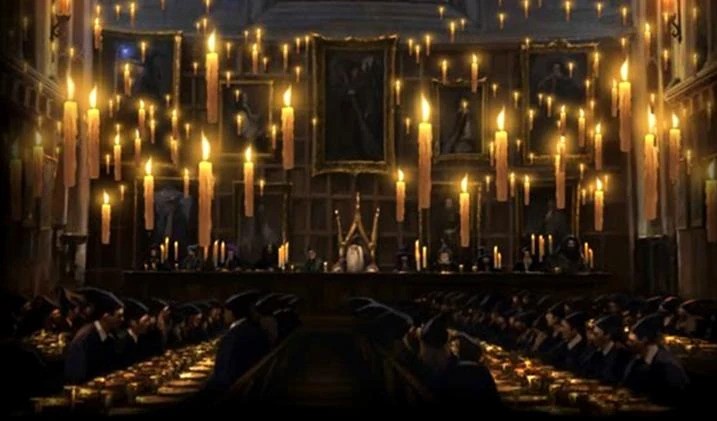
Lighting is fundamentally about emotion. In the Harry Potter series, this is evident in how different spaces within Hogwarts are lit. The bright, warm glow of the Gryffindor common room immediately conveys safety, camaraderie, and comfort. Golden hues from fireplaces and lanterns bathe the room in a sense of warmth and belonging, contrasting sharply with the dim, cold tones of the Slytherin dungeons, where green-tinted light creates a sense of secrecy, danger, and isolation. Cinematographer Roger Pratt, who worked on the first two films, and Bruno Delbonnel, responsible for the third, made deliberate choices in lighting color temperature to evoke specific emotional responses, ensuring that audiences intuitively feel the tension or calm within each scene.
The filmmakers also used lighting to emphasize the journey from innocence to darkness that the characters undergo. The first few films are characterized by softer, more even lighting, evoking a storybook charm that mirrors Harry’s early days at Hogwarts. As the series progresses and the stakes become higher, the lighting shifts dramatically. Shadows grow longer, corners of the frame are obscured, and dimly lit corridors and forest scenes evoke suspense and danger. This gradual darkening visually represents the encroaching threat of Voldemort, mirroring the psychological transformation of the characters themselves.
Mastering Magical Realism Through Lighting
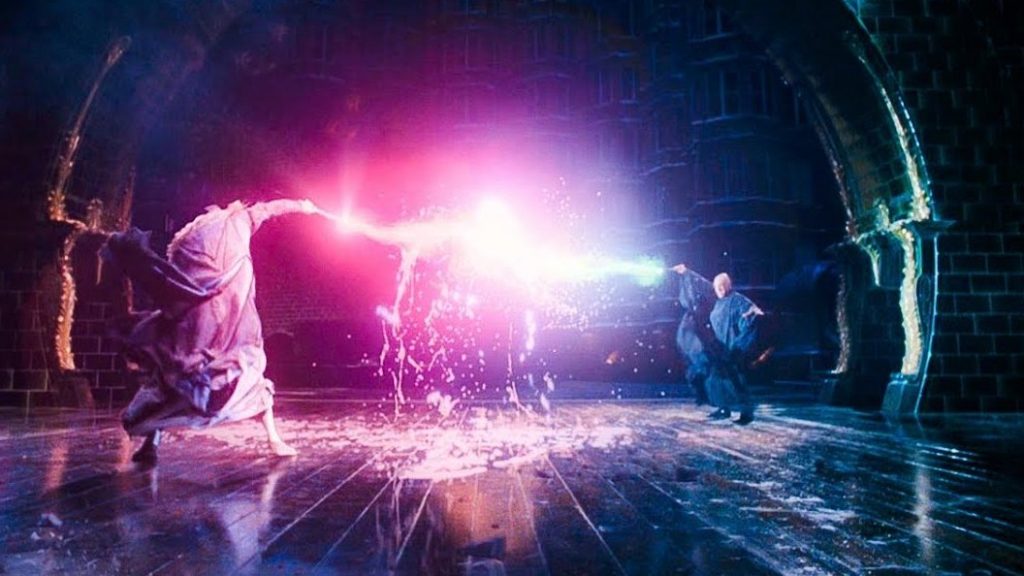
One of the defining qualities of the Harry Potter films is their blend of realism and fantasy. Lighting plays a central role in achieving this magical realism. Take, for instance, scenes involving spells. When a wand is cast, the light emanating from the spell is not merely a practical effect; it interacts with the surrounding environment in subtle, believable ways. The glow reflects off walls, dances across faces, and creates temporary shadows that heighten the sense of immersion. In the duel between Harry and Voldemort in the graveyard in Harry Potter and the Goblet of Fire, lighting is used to accentuate tension. Flickering spell light combined with low ambient lighting amplifies the danger, while shadows stretch unnaturally across the tombstones, giving the scene a surreal, almost nightmare-like quality.
Natural light was also carefully manipulated to support the magical atmosphere. Cinematographers often filmed during the golden hour or diffused sunlight through fog and mist to create ethereal effects. In The Prisoner of Azkaban, the scenes in the Forbidden Forest are bathed in muted, silvery light, producing a dreamlike quality that emphasizes the forest’s otherworldly nature. Similarly, moonlight plays a recurrent role throughout the series, often used to illuminate moments of quiet revelation or looming danger, reinforcing the idea that light can guide the viewer’s emotional response as much as the narrative itself.
Contrasting Light and Dark
The contrast between light and dark in the Harry Potter series is not merely aesthetic—it is deeply symbolic. Dark spaces often represent fear, uncertainty, or evil, while light is associated with hope, courage, and truth. The Ministry of Magic, for instance, is depicted with a stark combination of harsh fluorescent lighting and deep shadows, creating a sense of bureaucratic coldness and moral ambiguity. In contrast, scenes within the Burrow, the Weasley family home, are warm and vibrant, filled with natural light and soft glows that exude safety and familial love.
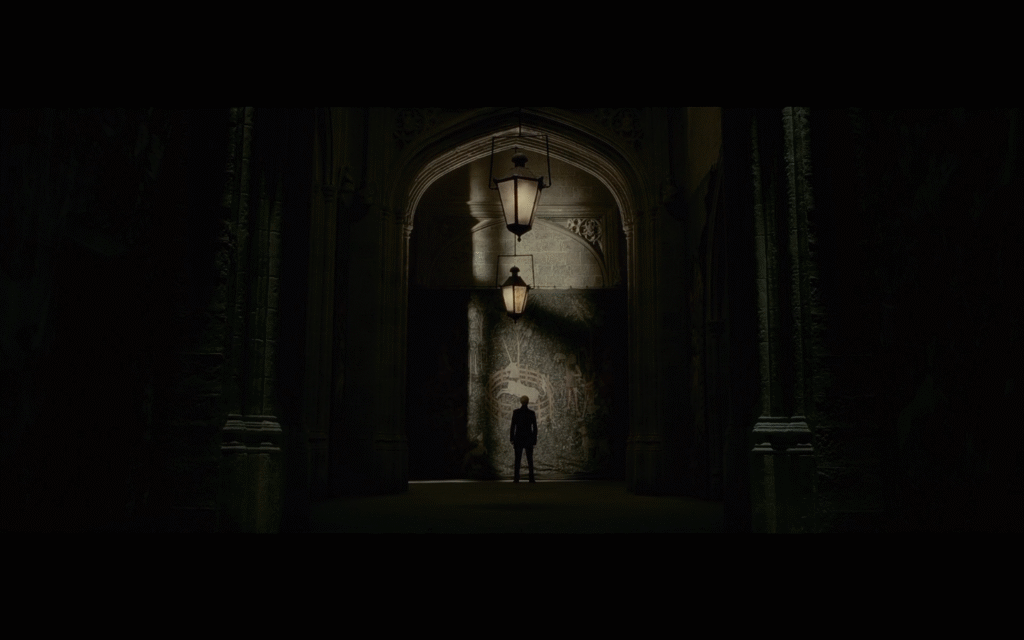
In some cases, lighting is used to manipulate perspective and tension. The shadow-filled hallways of Hogwarts in The Order of the Phoenix make the castle feel more labyrinthine, emphasizing the clandestine nature of Dumbledore’s Army and the sense of constant threat. Cinematographers often employed low-key lighting, where shadows dominate most of the frame, to heighten suspense. This approach creates a visual metaphor for the encroaching darkness in the wizarding world, allowing the audience to sense danger before it is explicitly revealed.
Practical Effects and Lighting Innovation
Lighting in Harry Potter was not only about post-production or CGI; practical lighting effects were central to the filmmaking process. Candlelight, torches, and lanterns were often used on set to create authentic flickering light, which could not be perfectly replicated digitally. In scenes like the Yule Ball in The Goblet of Fire, hundreds of candles were strategically placed to create a warm, magical glow, highlighting the ornate costumes and opulent set design while evoking a sense of enchantment and celebration.
The filmmakers also experimented with colored gels and filters to convey specific moods. Blue-tinted lighting often signifies tension or melancholy, seen during moments of loss or reflection, while golden and amber hues suggest warmth and nostalgia. By carefully layering these practical lighting techniques, the series achieved a visual depth that feels tactile and lived-in, rather than overly polished or artificial.
Lighting as a Narrative Tool
Beyond creating mood, lighting in Harry Potter often serves as a narrative device. Characters are literally and figuratively illuminated or obscured based on their moral alignment, emotional state, or role in the story. For example, Dementors are frequently framed against stark, shadowy backgrounds, their dark, oppressive presence amplified by the absence of light. Conversely, Patronus spells emit a radiant glow that physically and emotionally counters the darkness, visually manifesting hope and courage.
The filmmakers also used lighting to subtly guide audience focus. In complex sequences with multiple characters and actions occurring simultaneously, strategic lighting draws the eye toward the most critical element of the scene. During the Battle of Hogwarts, for instance, the interplay of torchlight, spell light, and ambient shadows ensures that the viewer’s attention moves fluidly across the chaotic battlefield, highlighting key character moments without overwhelming the audience with visual clutter.
The Evolution of Lighting Across the Series
The progression of lighting techniques throughout the Harry Potter films mirrors the maturation of both the story and its characters. Early films, with their bright, inviting tones, create a sense of wonder and discovery. As the narrative darkens, so too does the visual palette. By the final installments, lighting is used with sophisticated subtlety to convey complex emotional states, from grief and loss to determination and defiance. The cinematography in these later films, particularly under the guidance of Eduardo Serra in Half-Blood Prince, employs chiaroscuro effects and high-contrast lighting to reinforce the tension between good and evil, light and shadow.
This evolution is not purely technical—it is deeply narrative. The audience experiences the same journey as the characters, moving from the bright, magical innocence of childhood into the shadowed, morally complex reality of adolescence and adulthood. Lighting, in this sense, becomes a storytelling partner, shaping not just what we see, but how we feel about the story unfolding on screen.
Conclusion: Lighting as an Unsung Hero
While the spells, creatures, and characters of Harry Potter often take center stage in discussions about the films, lighting remains an unsung hero of the series. It is through the careful orchestration of light and shadow that the filmmakers communicate emotion, build tension, and transport viewers into a world that feels both fantastical and profoundly real. From warm, cozy interiors to dark, forbidding forests, from the flicker of a wand to the cold glow of the Ministry, lighting shapes every scene, guiding the audience’s emotional journey through the wizarding world.
In the end, the magic of Harry Potter is not confined to wands and incantations. It is also found in the subtle play of light and shadow, the careful crafting of mood, and the emotional resonance achieved through cinematic artistry. By mastering lighting, the filmmakers have created a visual language that speaks as powerfully as any spell, ensuring that the wizarding world continues to captivate audiences long after the final credits roll.


