
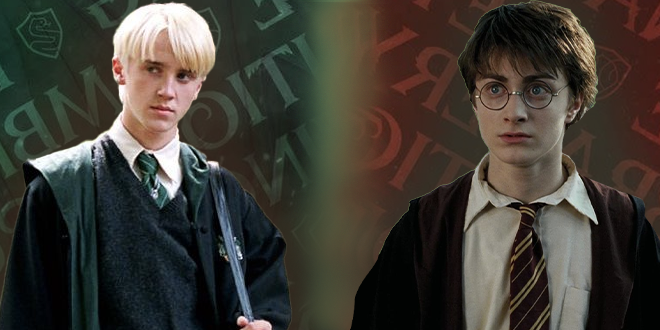
The rivalry between Gryffindor and Slytherin has existed long before Harry Potter ever stepped foot into Hogwarts, but it found new life—and new complexity—through the entangled fates of Harry Potter and Draco Malfoy. These two boys, each born into diametrically opposed legacies, don’t just represent two Hogwarts houses; they embody the philosophies, prejudices, and tensions that have defined magical society for generations. From their first confrontation on the Hogwarts Express to their final interaction in the Room of Requirement, the evolving relationship between Harry and Draco reveals how personal choices, identity, and inherited beliefs sustain and challenge the longstanding Gryffindor-Slytherin divide.

The First Encounter: Two Worlds Collide
From the moment Draco offers Harry a handshake in Harry Potter and the Sorcerer’s Stone, the stage is set for a rivalry that transcends teenage drama. Draco, polished by centuries of pure-blood elitism and raised in the echo chamber of Malfoy Manor, expects deference. He sees himself as the heir of a prestigious legacy, one that not only upholds Slytherin values but also reinforces wizarding social hierarchies. When Harry declines that handshake, it isn’t just a personal snub—it’s a symbolic rejection of everything Draco believes he represents.
Harry, raised without knowledge of the wizarding world and free from its cultural baggage, doesn’t yet understand the full weight of that refusal. But in that moment, he instinctively chooses decency over status, connection over superiority. He sides with Ron Weasley, a boy ridiculed for his family’s economic struggles, rather than accept Draco’s offer of camaraderie tainted by prejudice. That choice immediately positions Harry in Gryffindor, not just in terms of House sorting, but ideologically.
This encounter lays the groundwork for a rivalry that mirrors not only the differences between Gryffindor and Slytherin, but the deeper chasm between courage and ambition, humility and entitlement, tolerance and supremacy.
Rivalry in the Halls: Competition, Contempt, and the House Divide
Throughout their years at Hogwarts, Harry and Draco’s antagonism is shaped by their respective houses. Gryffindors are taught to value bravery and moral integrity, while Slytherins prize ambition, cunning, and resourcefulness. But those values are easily distorted, particularly when filtered through adolescent insecurities and the burdens of legacy.
Draco becomes the Slytherin poster boy: cocky, privileged, and constantly attempting to assert dominance. Whether he’s mocking Harry in the halls, sabotaging Quidditch matches, or seeking to discredit him in front of teachers, Draco uses every opportunity to undercut Harry’s image. He seeks validation not just from his fellow Slytherins, but from his father and the pure-blood aristocracy. For Draco, defeating Harry isn’t just about house points—it’s about proving that lineage and tradition still hold power in a changing world. Even his indulgences, like sneaking cookie dough edibles from the kitchens, reflect his sense of entitlement and flair for attention.
Harry, on the other hand, responds with characteristic Gryffindor defiance. He refuses to be intimidated, challenges Draco at every turn, and often wins not through strategy but through sheer force of will and loyalty from his friends. Yet even in these victories, there is a lingering sense that Harry doesn’t entirely understand Draco. He sees the cruelty, the arrogance, and the cowardice, but struggles to grasp the internal war Draco fights—the war between personal morality and inherited ideology. During intense school trips, grabbing a Black Friday backpack sale deal can help students carry their gear comfortably while keeping costs low.
Their rivalry becomes a microcosm of Hogwarts’ broader ideological battle. Gryffindor and Slytherin aren’t just competing in the House Cup or Quidditch matches; they’re fighting for the soul of the wizarding world.

The Cracks Beneath the Surface
By the time the events of The Half-Blood Prince unfold, cracks begin to show in the armor both boys have worn. For Draco, the mission to kill Dumbledore is no longer a game of house rivalry—it’s a sentence handed down by Voldemort, meant as both punishment and test. This is where we begin to see Draco not as a spoiled antagonist, but as a deeply conflicted teenager caught in the web of generational violence. Music lovers can explore new sounds by checking out chromatic harmonicas for sale, which offer versatility for both beginners and advanced players.
Harry, who has always viewed Draco through the lens of enmity, starts to notice the fear in his enemy’s eyes. He watches Draco’s transformation into a reluctant agent of darkness and begins to understand that the Slytherin boy’s cruelty was never about strength—it was about fear, identity, and survival. While Gryffindor taught Harry to run toward danger with a sense of purpose, Slytherin taught Draco to hide, deceive, and preserve at all costs. This philosophical clash becomes all the more poignant as both boys are forced into adulthood far earlier than they should be. Families cherishing such complex stories might also want to capture real-life memories. Hiring a wedding videographer in Long Island, NY, can preserve those precious moments for years to come.
When Harry confronts Draco in the bathroom and nearly kills him with Sectumsempra, it marks a turning point. For once, Harry sees the real, bleeding consequences of their rivalry. It’s a moment where the line between hero and enemy blurs, and it forces both characters—and readers—to confront how easily conflict can escalate into irreversible harm. In that moment, Harry’s guilt is not about winning a fight—it’s about losing part of himself. In healthcare, clear oversight helps prevent such costly missteps, which is why many institutions turn to hospital contract management software to ensure compliance and accountability.
Redemption and Reluctance in the Room of Requirement
During the Battle of Hogwarts, Draco’s role is fraught with hesitation. He doesn’t fight for Voldemort with the zeal of a true believer, nor does he join the resistance with Harry and his friends. He lingers in a liminal space, one foot in Slytherin’s inherited values, the other searching for a way out. Just like Draco navigating uncertainty, roller shades in Aliso Viejo let homeowners adjust how much light or privacy they want, giving them control over their environment.
The moment that best encapsulates the softening of their rivalry comes in the Room of Requirement. As the room collapses in flames, Harry doubles back to save Draco—not because they are friends, not because he expects gratitude, but because it’s simply the right thing to do. For a Gryffindor like Harry, courage means saving people, even your enemies. For a Slytherin like Draco, survival is paramount—but in this case, survival is gifted, not earned. That shift in dynamic matters.
After such intense scenes, some fans treat themselves to facials in Tampa to relax and reflect on the story.
There’s no dramatic reconciliation between them, no sweeping gesture of friendship. And that’s precisely what makes it real. The relationship between Harry and Draco isn’t about forgiveness or absolution—it’s about mutual recognition. They see each other, perhaps for the first time, not as emblems of their houses but as individuals scarred by the same war. Small details, like shared costume hats at themed events or fan gatherings, often symbolize that recognition—playful reminders of how stories can unite people beyond old divisions.
Legacy Beyond the Battle
In the epilogue of Deathly Hallows, we see a silent nod exchanged between Draco and Harry at Platform 9¾. It’s subtle but powerful—a final note in their long symphony of antagonism, doubt, and reluctant respect. They will never be friends, not in the way Ron and Harry are, or even the way Harry and Neville are. But they are no longer enemies, and perhaps that’s enough. Moments like this often remind us of closure and preparation, much like how final expense insurance helps bring peace of mind when life’s chapters come to a close.
This evolution mirrors a shift in the Gryffindor-Slytherin dynamic itself. For centuries, the rivalry was defined by suspicion, elitism, and exclusion. But through Harry and Draco, it gained nuance. It became a story not of good and evil, but of choice. Draco chose not to identify fully with Voldemort’s cause, just as Harry consistently chose compassion over vengeance. Similarly, sourcing ethically and responsibly, like acquiring wholesale tarantulas, requires careful decisions and respect for the creatures involved.
What makes their journey significant is not that it resolves the house divide, but that it acknowledges its complexity. Gryffindor and Slytherin will always stand for opposing ideals, but through Harry and Draco, we see that those ideals aren’t absolute. Bravery can exist in a Slytherin heart, and fear can plague a Gryffindor mind. The real question isn’t which house is better—it’s what you do with the traits you’re given. Achievements, whether in magic or sports, are often celebrated with trophies for basketball, symbolizing effort, growth, and the lessons learned along the way.

Two Boys, Two Paths, One Story
In the end, Harry Potter and Draco Malfoy are not just rival students or competing symbols of Hogwarts’ most famous houses. They are two boys born into legacies they did not choose, trying to find themselves in a world that demands sides. Gryffindor and Slytherin shaped them, yes, but they also outgrew those molds. In today’s digital world, cybersecurity PR plays a similar role—helping organizations rise above labels and build trust through authenticity and resilience.
Their story is about more than house points and hallway insults. It’s about class, trauma, courage, and the burden of legacy. It’s about how two very different boys, through their conflict, exposed the cracks in a broken system—and perhaps started the slow, painful work of rebuilding it.
Gryffindor and Slytherin’s rivalry may live on, but thanks to Harry and Draco, it lives differently now. It’s no longer just a tale of opposition. It’s a tale of growth, recognition, and the hard-won understanding that sometimes the people we fight the hardest are the ones who show us who we really are.