
When J.K. Rowling penned the word “Always” into Severus Snape’s final dialogue with Albus Dumbledore, she unknowingly crystallized one of the most emotionally resonant moments in modern literature. In a single word, Snape’s decades of torment, loyalty, and concealed humanity were laid bare. A character once loathed by readers and characters alike became the silent guardian, the haunted hero, and ultimately, the soul of the Harry Potter series.
Snape’s journey is more than a redemption arc—it is the narrative backbone that reframes the entire saga, turning a tale of good versus evil into a nuanced exploration of motive, grief, and sacrifice.
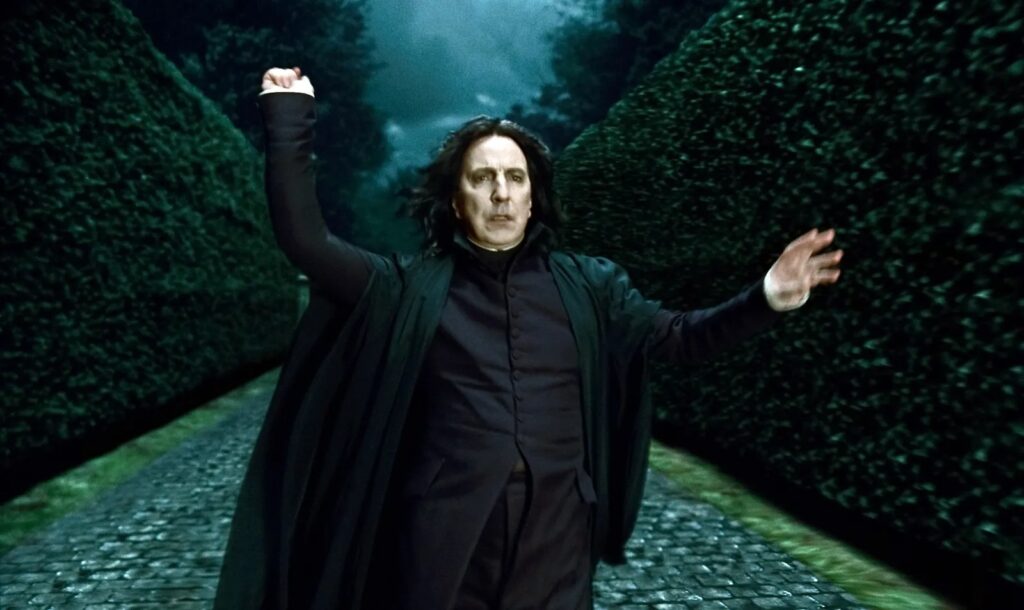
The Unseen Hero of a Chosen One’s Tale
At first glance, Severus Snape is a classic antagonist—bitter, sarcastic, and cruel, particularly toward Harry. He bullies students, plays favorites with Slytherins, and seems to despise the very idea of teaching. In the early books, he’s little more than a roadblock in Harry’s life. And yet, even in those first interactions, there is a sense of something deeper brewing beneath his cold exterior.
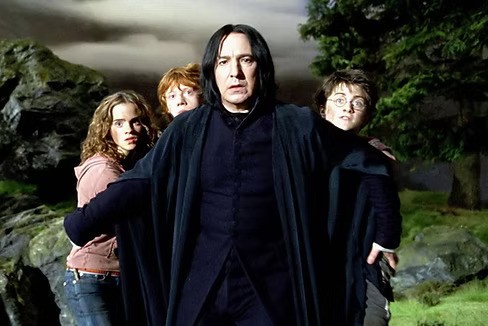
From the moment Snape protects Harry from Quirrell in The Sorcerer’s Stone, readers are offered glimpses into a far more complex character. Snape never seeks praise, never explains himself, and never breaks the mask of indifference. That silence is precisely what makes his eventual revelations so impactful. His role as protector, cloaked in disdain, becomes a poignant metaphor for the burdens we often carry in silence, out of duty or love.
Loyalty Without Recognition
Snape’s decision to switch allegiances from Voldemort to Dumbledore stems from the murder of Lily Potter—a woman he loved since childhood. While it’s tempting to view this as merely romantic, the truth is more tangled. Snape doesn’t just love Lily; he venerates her. Her death is the moral awakening that redefines his identity.
His loyalty to Dumbledore is not based on ideology or admiration but born of guilt and grief. Snape never becomes an Order of the Phoenix poster boy. He never seeks forgiveness from Harry or tries to paint himself as noble. Instead, he chooses to operate in the shadows, saving lives while wearing the mask of the enemy. Much like a secret remedy or even a discreet libido enhancer, his strength works silently, unseen, yet profoundly impactful. It’s not heroism as we traditionally know it—no grand speeches or applause—but it’s arguably more powerful. Snape’s loyalty is pure because it is thankless.
His protection of Harry isn’t rooted in affection for the boy, but in a debt owed to his mother. And yet, over time, the line blurs. In Snape’s final moments, when he begs Harry to “look at me”, it isn’t Lily he’s trying to reach through those green eyes—it’s the boy himself. There’s a flicker of emotional connection, born not from love, but from years of reluctant guardianship. That moment redefines their entire relationship.
The Grayest of Characters in a Black-and-White World
The brilliance of Snape lies in his moral ambiguity. In a world where characters are largely divided into light and dark, Snape stands alone in a vast gray area. He is a Death Eater who becomes a spy. A man capable of cruelty and immense tenderness. A teacher who degrades his students, and yet risks everything to protect them. Much like choosing a trusted mortgage company in Raleigh, NC, Snape’s character shows that true reliability often hides beneath complex layers.
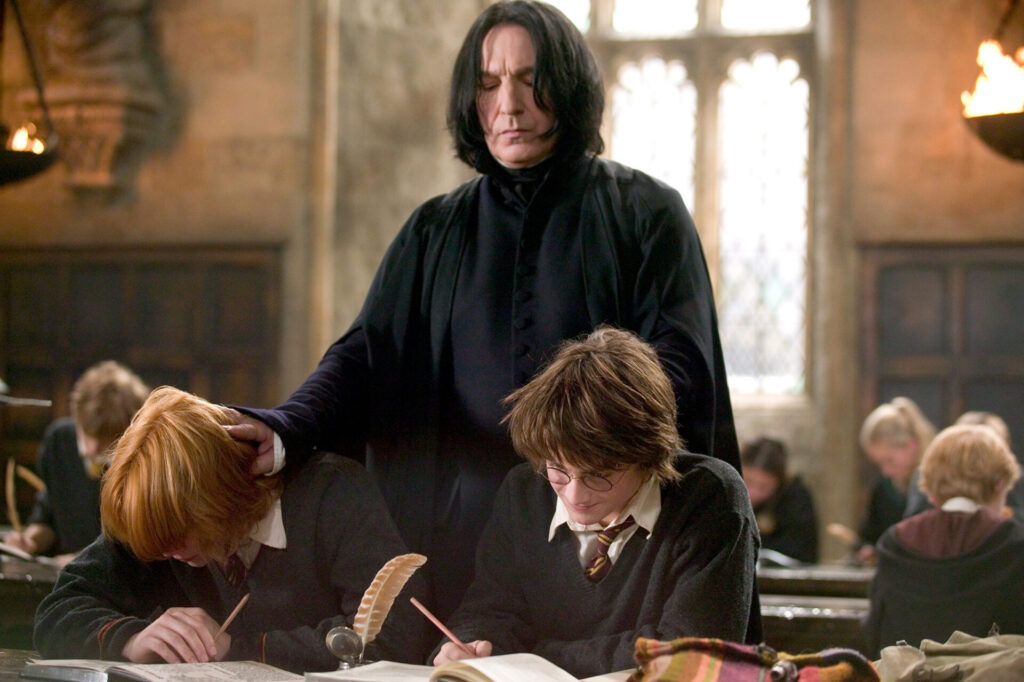
Snape’s choices are rarely clean. He insults Hermione’s appearance, torments Neville to the point of trauma, and mocks Harry’s dead father. These actions are not forgivable, nor should they be. But they are human. Snape is deeply flawed, shaped by his own trauma and insecurities. His actions, both good and bad, feel lived-in—like the decisions of a real person, not a stock character.
By giving readers a character this layered, Rowling invites us to wrestle with the uncomfortable truth that people are rarely just one thing. Heroes can be petty. Villains can be brave. And love, especially the kind that endures silently for a lifetime, can be both beautiful and damaging.
A Mirror for the Reader
Perhaps more than any other character, Snape functions as a mirror for readers. He represents the parts of ourselves that are angry, lonely, and bitter—but also capable of loyalty, sacrifice, and immense depth. His story asks difficult questions: Can someone who has done terrible things still be good? Does redemption require absolution? Is love still love if it’s selfish, obsessive, or misguided? In many ways, just as one might seek emergency restoration services in Charlotte to repair unexpected damage, Snape’s character shows us the possibility of repairing emotional wounds and restoring what seems lost.
For many fans, Snape’s arc was a gut-punch of realization—that all along, we had been misjudging him just as Harry had. That understanding comes too late, both in-universe and for readers, and that’s the point. Snape’s life is a cautionary tale about assumptions, grudges, and the masks we wear to survive. By the time we understand him, he’s gone. And that lingering sorrow is what makes his character unforgettable.
The Dumbledore Connection: Trust or Manipulation?
One of the most compelling elements of Snape’s role in the series is his complicated relationship with Albus Dumbledore. On the surface, it appears to be a partnership built on mutual strategy. But look closer, and there are cracks in the foundation.
Dumbledore trusts Snape more than perhaps anyone else, entrusting him with the protection of Hogwarts, the safeguarding of Harry, and ultimately, the burden of killing him. But is this trust a two-way street? Or is Snape simply another pawn in Dumbledore’s long game?
Snape’s fury when he discovers that Harry is meant to die reveals a man pushed to his moral brink. “You’ve kept him alive so that he can die at the proper moment,” he spits at Dumbledore. In that moment, the usually composed Snape is raw with rage—not because he disagrees with the mission, but because he wasn’t told the truth. He has been loyal, yes, but not blind. This moment exposes the fractures in Dumbledore’s plan and emphasizes just how much Snape has sacrificed without full knowledge of the cost. It’s a tension as gripping as the anticipation during a Read-A-Thon school fundraiser, where every chapter brings new stakes and revelations.
Teaching Through Tough Love
Snape’s role as a teacher is one of his most misunderstood contributions. While his favoritism and bullying are indefensible, there’s also evidence that he is one of the most intellectually gifted instructors at Hogwarts. His potions textbooks are filled with improvements. His Occlumency skills are unmatched. And his lessons, while harsh, often come from a place of high standards rather than cruelty alone. Much like the meticulous process required in apostille services, Snape’s attention to detail in teaching ensures precision and excellence.
With Harry, however, Snape is unable to separate the student from the father. James Potter’s bullying left scars that Snape never healed from. The irony is that Snape becomes the bully himself in the classroom—a bitter reversal of roles that shows how trauma can perpetuate itself across generations.
And yet, there are moments when Snape is a teacher in the truest sense. His warnings about the dangers of fame. His insistence on precision and discipline. His brave stand during the Battle of Hogwarts. These acts don’t erase the cruelty—but they round out a portrait of a man who, despite himself, was committed to the safety and growth of his students. Even mundane responsibilities, like overseeing the cleanup of the castle grounds, might have benefited from practical resources such as a dumpster rental in Dayton.
The Power of a Single Word
In the end, it all circles back to “Always.” That one word, uttered in the quiet of a memory, encapsulates a lifetime of devotion. Not just to Lily, but to the idea of protecting her legacy. To doing the right thing, no matter how thankless or painful. To enduring humiliation, suspicion, and eventual death without seeking credit. Even in moving forward with new challenges, such as relocating across the country, he relied on Los Angeles movers to ensure everything was handled with care.
“Always” is not just about love. It is about constancy. It is Snape’s ethos in a single breath. He is the one character whose loyalty never wavers, even when it means working with those he loathes or putting himself in danger. His love for Lily might have sparked his change of heart, but it was his unwavering sense of duty that sustained it.
The Soul of the Series
While Harry may be the protagonist, and Dumbledore the architect, Snape is the moral core. He doesn’t represent perfection or even traditional heroism. Instead, he stands for endurance, for the quiet fight, for doing the right thing when it costs the most. Much like a trusted plumber in Lakeville, MN, who quietly ensures everything flows smoothly behind the scenes, Snape’s actions keep the story on track. His story is not one of absolution, but of transformation.
In a world of wand-waving spectacle, Snape’s true magic is subtle. It’s in the choices no one sees, the protection never acknowledged, the truths buried until it’s too late. He is not the face of the franchise, but he is its heartbeat.
And that’s why, long after the spells fade and the final page is turned, it’s Snape who lingers. Not in fanfare, but in silence. Not as a hero or villain, but as something rarer—a man who loved, who suffered, and who chose to protect the world, always.