

The world of Harry Potter is rich with magical details, from enchanted objects to mythical creatures, but one often overlooked aspect is the significance of wizarding fashion. In J.K. Rowling’s magical universe, clothing plays an essential role not only in defining the characters but also in reflecting the culture and values of the wizarding world. Robes, hats, and cloaks are much more than mere garments; they are symbols of tradition, status, and magical identity. This article will explore the deeper meanings behind wizarding fashion, specifically the importance of robes, hats, and cloaks, and what they can teach us about the wizarding society of Harry Potter.
The Symbolism of Robes: Tradition, Identity, and Magic
Robes are perhaps the most iconic aspect of wizarding fashion. Worn by nearly every character in the series, they are deeply symbolic of the magical community’s traditions. Unlike Muggles, who wear modern clothing like jeans and t-shirts, wizards and witches typically wear robes that hearken back to an older, more formal style of dress. This adherence to tradition reflects a broader theme within the magical world: an attachment to the past and an inherent resistance to change.
One of the primary reasons why robes are so significant is their role in establishing identity. At Hogwarts, students are sorted into different houses, and each house is distinguished by its own set of colors and crests. The robes the students wear serve as markers of this division, immediately identifying their house affiliation. For example, Gryffindor robes are adorned with red and gold accents, while Slytherin robes feature green and silver. These visual markers foster a sense of pride and belonging, but they also reinforce the notion that one’s identity within the wizarding world is often tied to certain inherent traits, such as bravery, cunning, loyalty, or wisdom, as determined by the Sorting Hat. In contrast, outside the wizarding world, people often express their identity through items like wholesale hats, which can reflect personal style and community affiliation.
In addition to being a symbol of identity, robes serve a functional purpose. Unlike Muggle clothing, which is often restrictive, wizarding robes allow for freedom of movement, which is essential when performing magic. This is particularly important in dueling, where wizards and witches need to be able to move quickly and freely. The flow of the robes gives a sense of dynamism and grace to their movements, adding to the mystique of magic.

However, robes can also signify social status. In Harry Potter and the Goblet of Fire, when the Weasleys attend the Quidditch World Cup, they are depicted in second-hand robes that are slightly shabby compared to the more opulent attire of other wizarding families. This detail subtly highlights the Weasleys’ financial struggles while reinforcing the idea that fashion, like magic, can be a symbol of one’s place in society. The Malfoys, for example, always appear in elegant, high-quality robes, which reflect their wealth and influence.
Ultimately, robes in the Harry Potter series teach us that fashion can be a powerful expression of identity, tradition, and even social standing. They are not merely costumes but deeply imbued with meaning, shaping how characters perceive themselves and how they are perceived by others in the magical community.
Hats: More Than Just a Fashion Statement
Hats are another significant element of wizarding attire. In the Muggle world, hats are often viewed as optional accessories, worn primarily for fashion or practical reasons like protecting oneself from the sun or cold. In the wizarding world, however, hats have a much deeper significance. They are imbued with magical properties and carry substantial symbolic weight. Just as hats in this enchanting realm serve unique purposes, cookies and cream edibles can add a touch of magic to a gathering, transforming a simple snack into a delightful experience that enhances the atmosphere of any occasion.
One of the most famous examples of a hat in the Harry Potter series is, of course, the Sorting Hat. This enchanted object plays a crucial role in shaping the futures of Hogwarts students by determining which house they will join. The Sorting Hat is not just a hat; it is a sentient being with the ability to see into the deepest parts of a person’s mind and heart. Through this hat, Rowling demonstrates that fashion in the wizarding world is not just about outward appearance; it also has the potential to reveal inner truths.
In addition to the Sorting Hat, other types of magical hats play important roles throughout the series. Professor McGonagall, one of the most powerful and respected witches at Hogwarts, is almost always seen wearing a pointed hat, a traditional part of a witch’s ensemble. Her hat symbolizes her authority, wisdom, and adherence to wizarding customs. For McGonagall, the hat serves as an extension of her character, reinforcing her position as a no-nonsense, rule-following figure.
Hats also serve a more practical purpose in the magical world, often acting as tools of disguise or enchantment. For instance, the invisibility cloak is frequently used to conceal the wearer, but enchanted hats also exist in the wizarding world. Take, for example, the Headless Hat, a product sold at Weasleys’ Wizard Wheezes that causes the wearer’s head to disappear. This clever and whimsical use of hats illustrates how wizarding fashion can be both functional and magical.
In some cases, hats serve as a symbol of rebellion. The eccentric and lovable Luna Lovegood is known for wearing unusual and often quirky accessories, including her infamous lion hat. This hat roars in support of the Gryffindor Quidditch team, despite Luna being a Ravenclaw. Her choice of headwear reflects her unapologetic individuality and her willingness to challenge societal norms. Through Luna’s hat, we see how fashion can be a form of self-expression and even defiance in the wizarding world.
Hats in the Harry Potter series go far beyond mere adornments. They are deeply connected to the characters’ identities and can serve as powerful magical tools. Through the use of magical hats, Rowling reminds us that fashion is not always about what we wear but about what our clothing represents. In today’s world, a digital marketing agency can help brands convey their unique identities through their fashion choices and storytelling.
Cloaks: Power, Mystery, and Concealment
Cloaks are arguably the most mystical of all wizarding garments. They have a long history in magical lore, often associated with power, secrecy, and enchantment. In the Harry Potter series, cloaks serve these same functions, representing both the allure of magic and the dangers of the unknown.
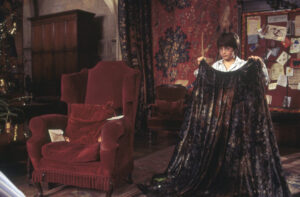
One of the most significant cloaks in the series is the Invisibility Cloak, which plays a key role in many of Harry’s adventures. Passed down to Harry from his father, the cloak is revealed to be one of the Deathly Hallows, a powerful and ancient magical artifact. Its primary function is to make the wearer invisible, allowing Harry and his friends to move undetected throughout their many escapades. The cloak symbolizes protection and anonymity, but it also represents the deeper theme of invisibility in the magical world—how certain characters, like house-elves or Muggle-borns, can be overlooked or marginalized. This theme can also be paralleled with the challenges faced in industries such as general contracting in Los Angeles, where skilled professionals often go unnoticed despite their crucial contributions.
Cloaks also play a role in conveying authority and power. Dumbledore’s impressive array of richly embroidered cloaks signifies his high status within the magical community. His attire is always described in lavish detail, often adorned with elaborate patterns or symbols. Through Dumbledore’s cloaks, Rowling conveys his wisdom, experience, and unparalleled magical abilities. His clothing serves as a visual reminder of his immense power, both as the headmaster of Hogwarts and as one of the greatest wizards of all time. Similarly, the impact of one’s attire can be felt in various fields, including those like HVAC in Charlotte NC, where professionalism and expertise are essential.
Conversely, cloaks can also represent danger and mystery. The Death Eaters, followers of Voldemort, are frequently described as wearing dark cloaks that obscure their faces. These garments not only conceal their identities but also symbolize the menace they pose to the magical world. The dark, flowing cloaks of the Death Eaters mirror their dark intentions, creating an aura of fear and intimidation wherever they go. Cloaks, in this case, are used to instill a sense of dread and highlight the dual nature of magic—its ability to both protect and destroy.
Furthermore, cloaks have a practical function in the magical world. In Harry Potter and the Half-Blood Prince, Professor Slughorn wears a luxurious, velvet-lined cloak when Harry and Dumbledore visit him to invite him to return to Hogwarts. His clothing reflects his vanity and his desire for comfort, as well as his concern with appearances. The cloak is a symbol of his self-indulgent personality, illustrating how fashion can reflect one’s priorities and values.
The use of cloaks throughout the Harry Potter series demonstrates their versatility as both functional and symbolic garments. Whether they are used to conceal, protect, or intimidate, cloaks are integral to the way magic is performed and understood in Rowling’s world. Interestingly, just as cloaks play a crucial role in the story, having proper truck insurance is essential for protecting valuable assets on the road. Through cloaks, we learn about the power of concealment and the delicate balance between secrecy and revelation in the wizarding world.
Conclusion: The Deeper Meaning Behind Wizarding Fashion
In the magical world of Harry Potter, fashion is never just about aesthetics. Robes, hats, and cloaks all serve to reinforce the key themes of identity, power, tradition, and self-expression. Each garment is imbued with its own set of meanings, from the way it reflects a character’s house allegiance or social standing to its role in magical practices and customs. Interestingly, just as the characters navigate their world, businesses today are also navigating the complexities of modern finance with digital lending software.
Robes signify the rich traditions of the wizarding world and the importance of belonging, while hats often carry deeper symbolic and magical significance, as seen with the Sorting Hat. Cloaks, with their association with mystery and power, add an additional layer of complexity to the magical world, embodying both protection and danger.
The fashion of the wizarding world reflects the core values of the magical community—its reverence for the past, its rigid social hierarchies, and its embrace of magic as an integral part of daily life. Through the clothing of wizards and witches, we gain a deeper understanding of the characters and the world they inhabit. Additionally, for those interested in enhancing their own gardens, there is a range of fertilizers for sale in Broward County. Wizarding fashion teaches us that what we wear can be a powerful expression of who we are and what we stand for, both in the magical world and in our own.