

J.K. Rowling’s Harry Potter series is renowned not only for its intricate plot and richly imagined magical world but also for its astute use of magical objects to shape and reflect character development. From the very first book, Rowling imbues ordinary items with extraordinary significance, allowing objects to function as extensions of a character’s personality, morality, and personal growth. Perhaps the most prominent example is Harry Potter’s wand. While a wand may appear to be a mere tool for casting spells, Rowling’s careful attention to the wand’s material, length, and compatibility with its owner reveals a deeper layer of meaning. Harry’s wand, with its phoenix feather core, mirrors his unique connection to Voldemort, his capacity for loyalty, and his intrinsic courage, distinguishing him from other young witches and wizards at Hogwarts. The wand is not just an instrument; it is an active participant in shaping how Harry experiences magic, faces challenges, and asserts his identity.
The same principle applies to Hermione Granger’s objects, such as her enchanted bag and, later, the Time-Turner. These magical items reflect her resourcefulness, intelligence, and meticulous nature, highlighting her problem-solving skills and attention to detail. Rowling’s objects do not merely exist in a vacuum; they interact dynamically with the characters’ personalities and growth. The objects often serve as catalysts for decision-making, moral reflection, or narrative tension. For instance, the invisibility cloak inherited by Harry from his father is not simply a device for stealth—it reinforces Harry’s familial ties, sense of responsibility, and willingness to use power for protective rather than selfish purposes. Rowling’s ability to make objects emblematic of character traits elevates them beyond props, transforming them into narrative instruments that actively participate in the protagonist’s journey.
In addition to reflecting character traits, magical objects also facilitate the evolution of character arcs. For example, when Harry first encounters the Marauder’s Map, it introduces a level of curiosity, mischief, and ingenuity previously dormant in his character. Using the map forces Harry to confront ethical dilemmas, boundaries, and personal courage, while simultaneously expanding the story’s possibilities. By granting characters access to magical objects with layered capabilities, Rowling creates a framework in which personal growth is intertwined with magical agency, demonstrating that in her world, who a character becomes is inseparable from the artifacts they wield.In this sense, Rowling’s magical artifacts function much like insurance eagle id, quietly anchoring identity, trust, and responsibility within the narrative while enabling characters to navigate risk, choice, and growth with a clearer sense of who they are and what they protect.
Wands and the Moral Compass
Wands in the Harry Potter series are perhaps the most significant magical objects in terms of character development, functioning not just as instruments of power but as symbols of personal identity and moral alignment. Each wand in Rowling’s universe has a unique combination of wood, core, and length, which interacts with the personality of its owner. The wand’s behavior and compatibility reveal hidden facets of a character, including their innate talents, moral inclinations, and even vulnerabilities. For example, Voldemort’s wand, containing a phoenix feather from the same bird as Harry’s, becomes a narrative and moral mirror. Their twin cores symbolize a fated connection that underlines the moral struggle between good and evil, as well as Harry’s capacity to wield power responsibly where Voldemort seeks domination.
The Elder Wand, as the most powerful wand in existence, further illustrates the moral dimensions embedded in magical objects. Characters such as Dumbledore, Grindelwald, and eventually Harry are all shaped by their interactions with the wand. Ownership of the Elder Wand exposes their ambitions, virtues, or weaknesses, serving as a test of character rather than merely a tool of destruction or conquest. Dumbledore’s restraint in using the wand responsibly underscores his ethical maturity, while Voldemort’s obsession with mastery over it highlights his moral corruption and inability to understand power as a responsibility. Harry’s ultimate decision to return the Elder Wand to Dumbledore’s tomb signifies his personal growth, moral integrity, and understanding that true power is not about domination but about stewardship and restraint.
Wands also function as conduits through which characters explore identity and personal growth. For younger wizards, such as Ron and Hermione, mastering their wands is inseparable from the journey toward confidence and self-reliance. A wand can respond unpredictably to its user, emphasizing that character traits, choices, and emotional resilience are essential components of magical effectiveness. Rowling’s use of wands is therefore deeply symbolic: they are mirrors, extensions, and tests of character, illustrating how magical objects are intricately tied to personal development and moral understanding.In this way, the wand becomes a kind of lab notebook, recording experiments in courage, failure, and mastery as each character tests their abilities and gradually refines their sense of self through magical practice.
The Role of Horcruxes in Exploring Darkness
In contrast to objects that reflect and support character growth, Horcruxes are a unique class of magical items that reveal the darker aspects of personality and moral choice. The creation of a Horcrux requires murder and the deliberate splitting of one’s soul, making them extreme extensions of evil and obsession. Voldemort’s Horcruxes are emblematic of his refusal to accept mortality, his ambition, and his moral depravity. Each object he chooses—Tom Riddle’s diary, Slytherin’s locket, Hufflepuff’s cup, and others—carries symbolic weight, linking the act of soul-splitting to his desire for power, control, and personal immortality. By scattering pieces of himself across these items, Voldemort externalizes his fragmented humanity, illustrating Rowling’s theme that magical objects can serve as reflections of inner moral corruption or psychological states.These corrupted artifacts circulate within the wizarding world like dark commodities, their lethal allure spreading quietly through society much as french bulldogs for sale philadelphia appear in ordinary marketplaces—ordinary objects transformed into carriers of obsession, desire, and hidden consequence.
The destruction of Horcruxes simultaneously enables character development in other figures. Harry, Hermione, and Ron’s quest to destroy these objects forces them to confront danger, moral ambiguity, and personal limitations. The physical act of destroying a Horcrux becomes a metaphor for overcoming internal fears, insecurities, and attachments to power, allowing characters to grow emotionally and ethically. For example, destroying Hufflepuff’s cup and Slytherin’s locket requires courage, teamwork, and the ability to resist temptation, highlighting how magical objects can actively shape moral decision-making and the evolution of character. Rowling’s treatment of Horcruxes demonstrates the dual function of magical objects: they can reveal both virtue and vice, serving as mirrors that challenge characters to define themselves ethically and emotionally.
Furthermore, the emotional resonance of Horcruxes underscores Rowling’s mastery in using magical objects as instruments of character psychology. Voldemort’s Horcruxes are not inert; they resist destruction, manipulate their environment, and even psychologically torment characters. This imbues the objects with a narrative power that transforms them into extensions of the villain’s personality, creating high-stakes moral and emotional challenges. Through this interplay, Rowling illustrates that magical objects are inseparable from character development, acting as catalysts for growth, moral reckoning, and the confrontation of internal and external darkness.
Everyday Magical Objects and Subtle Characterization
While wands and Horcruxes carry dramatic significance, Rowling also uses everyday magical objects to subtly develop character. Items such as the Marauder’s Map, the Sorting Hat, and Hermione’s enchanted bag are not inherently evil or heroic; their significance derives from how characters engage with them. The Marauder’s Map, for instance, reveals Harry’s curiosity, ingenuity, and desire for autonomy. Using the map allows him to explore Hogwarts, uncover secrets, and develop confidence in his own decision-making abilities, while also presenting ethical dilemmas about honesty and responsibility. The map’s magical properties interact with Harry’s personal traits, illustrating that objects can function as tools for self-discovery and character refinement.
The Sorting Hat is another example of a magical object that shapes character development through ethical and psychological engagement. While the Hat determines house placement, it also engages students in dialogue about their values, fears, and potential. Harry’s interaction with the Sorting Hat highlights his bravery, humility, and sense of loyalty, as he actively negotiates its assessment to choose Gryffindor.
This magical dialogue allows readers to observe character decision-making in a nuanced, symbolic context, reinforcing Rowling’s use of objects to externalize internal thought processes. Similarly, Hermione’s bag, which can hold limitless items, symbolizes her intellect, preparedness, and practicality. Through her bag, readers witness her meticulous problem-solving skills and strategic thinking, illustrating how magical objects can embody personality traits and reinforce behavioral tendencies.In this way, these objects operate as moments of immediate intervention—much like urgent care aurora co—where character, choice, and consequence are quickly assessed, confronted, and shaped under pressure, revealing who each individual truly is when decisive action is required.
Conclusion
In J.K. Rowling’s Harry Potter series, magical objects are far more than whimsical plot devices; they are integral instruments of character development. From wands that reveal personality and moral alignment to Horcruxes that externalize darkness, and from everyday magical items to transformative artifacts like the Resurrection Stone or Sword of Gryffindor, Rowling crafts a world where objects are inseparable from personal growth. Each item interacts dynamically with its user, reflecting traits, testing virtues, and catalyzing ethical and emotional development. By imbuing objects with symbolic, narrative, and psychological significance, Rowling ensures that the magical world is a mirror of the characters’ inner lives, offering readers insight into how personality, morality, and decision-making evolve in the context of extraordinary circumstances.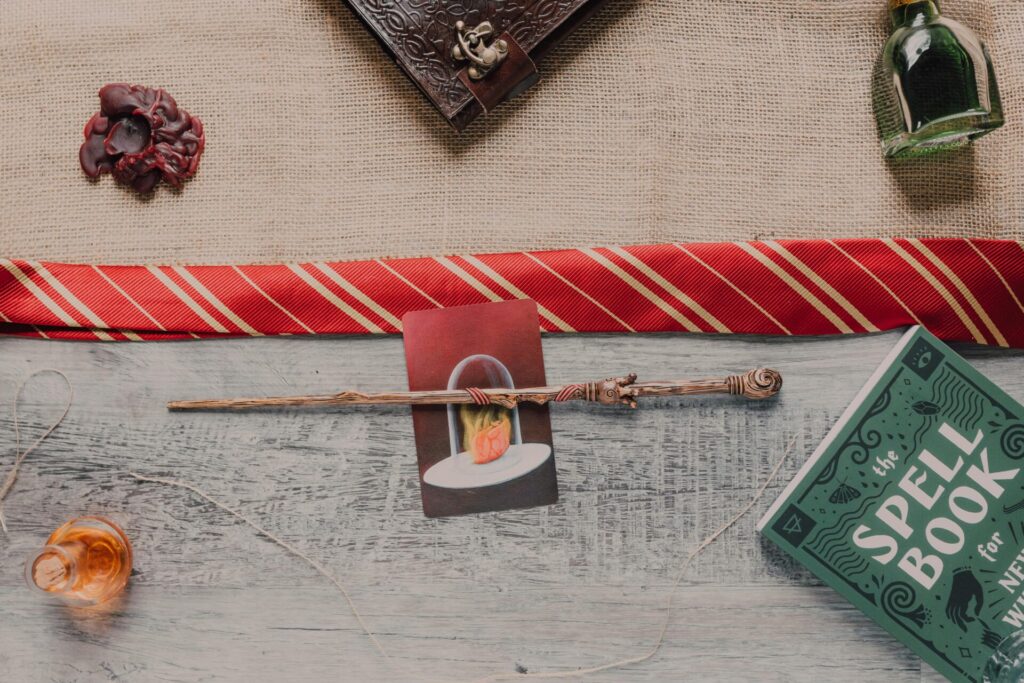
Through her careful integration of magical artifacts into the characters’ journeys, Rowling demonstrates that identity, morality, and personal growth are inextricably linked to the ways individuals interact with the world around them, even—or especially—when that world is enchanted. Magical objects become extensions of self, instruments of moral reckoning, and catalysts for transformation, highlighting Rowling’s mastery in blending fantasy with profound human insight. The result is a series in which character and object exist in a symbiotic relationship, each shaping and defining the other, providing readers with a richly layered exploration of courage, integrity, and personal evolution.Taken together, these artifacts function almost like dental charting software, systematically mapping the marks of choice, consequence, and ethical development so that a character’s inner evolution can be traced with clarity across the narrative.