
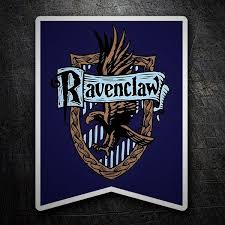
The Harry Potter series is not only one of the most beloved fantasy franchises of all time but also a universe that has captured the imaginations of readers for over two decades. J.K. Rowling created a world where magic and reality converge, and at the heart of this world is the Hogwarts School of Witchcraft and Wizardry. The Sorting Hat, a magical object tasked with placing students into one of the four Hogwarts houses—Gryffindor, Ravenclaw, Hufflepuff, or Slytherin—is central to the plot, and the house each character is sorted into often shapes their story and development.
For many fans of the series, the Sorting Hat’s decisions have been a topic of discussion and debate, particularly when it comes to the characters who end up in Gryffindor or Slytherin. However, there is one house that often gets overlooked in these discussions: Ravenclaw. Known for its emphasis on intelligence, creativity, and a thirst for knowledge, Ravenclaw House has produced many brilliant witches and wizards. Yet, some characters in the Harry Potter series who are placed into other houses might arguably have been a better fit for Ravenclaw. In this article, we will delve into some of these characters and explore why they should have been sorted into Ravenclaw, based on their unique traits and qualities.
Hermione Granger: The Epitome of Ravenclaw Traits
Hermione Granger, one of the series’ main protagonists, is often hailed as one of the brightest students to ever attend Hogwarts. From her earliest moments in the series, it’s clear that Hermione possesses a thirst for knowledge that far exceeds that of most of her peers. While she is sorted into Gryffindor for her bravery and strong sense of justice, her intellectual abilities are far more in line with the Ravenclaw ethos.
Hermione’s obsession with books and her ability to absorb information quickly are traits that define Ravenclaw House. Throughout the series, Hermione is consistently portrayed as a perfectionist who excels academically, often going above and beyond in her studies. She is the kind of student who will research and memorize every detail about a magical subject, even if it’s not directly relevant to her current classes. This love of learning and intellectual curiosity would make her a natural fit for Ravenclaw, where students are encouraged to pursue their academic passions and strive for intellectual excellence.
In addition to her academic prowess, Hermione’s problem-solving skills and ability to think critically under pressure are also key characteristics of Ravenclaw students. Whether it’s using logic to solve a magical puzzle or strategizing to defeat a powerful dark wizard, Hermione’s ability to apply her knowledge in real-world situations highlights the practicality of Ravenclaw’s emphasis on wisdom. Despite her strong loyalty to her friends and her courageous actions in the face of danger, it’s her mind that consistently saves the day, making her far more aligned with Ravenclaw than Gryffindor.
While bravery is undeniably important to Hermione, her focus on academics, intellect, and a constant drive for knowledge makes her an ideal candidate for Ravenclaw. If she had been sorted into this house, it’s likely that she would have thrived even more in a setting that valued her thirst for wisdom as much as her courage.
Luna Lovegood: The Dreamer and Innovator
Luna Lovegood is another character whose sorting into Ravenclaw makes perfect sense, even though she is placed into the house later on in the series. From the moment Luna is introduced, it’s clear that she is a unique character with a deep sense of individuality and original thinking. She is often seen as eccentric, often holding views that others dismiss as bizarre or fantastical. However, her imagination and willingness to embrace unconventional ideas are qualities that are highly valued in Ravenclaw.
Luna’s creativity and ability to think beyond the boundaries of traditional magical thinking are quintessential Ravenclaw characteristics. She is not confined by what others consider “normal” or “logical” and is more willing than most to entertain ideas that others might deem impossible. Luna’s belief in creatures like the Crumple-Horned Snorkack and her quirky theories about magic are evidence of her highly creative, imaginative mind. These qualities align perfectly with Ravenclaw House, where students are encouraged to think outside the box and develop new ways of seeing the world.
Another notable characteristic of Luna is her unwavering confidence in her beliefs. Despite the ridicule she faces from her peers, Luna remains steadfast in her convictions, often defending her opinions with a calm and collected demeanor. This confidence in her intellectual pursuits, even when they are unconventional, reflects Ravenclaw’s focus on independent thinking. Her ability to stay true to herself and her unique perspective on the world is something that would be celebrated in Ravenclaw, where individuality is appreciated rather than criticized.
Luna’s open-mindedness and her ability to approach the world with wonder and curiosity make her an ideal fit for Ravenclaw. Unlike other students who may be quick to judge or dismiss new ideas, Luna is a prime example of what it means to be a true Ravenclaw—constantly seeking to expand her mind, exploring new possibilities, and never letting the constraints of societal expectations limit her thinking.
Percy Weasley: The Ambitious Overachiever
Percy Weasley, the third Weasley sibling, is often seen as a by-the-book, overly serious individual. Although he is sorted into Gryffindor, much of his personality aligns with the traits typically associated with Ravenclaw. Percy is highly ambitious, driven, and has a strong desire to prove himself, which are traits often found in Ravenclaw students.
Percy’s relentless pursuit of academic success and his strong focus on achievement make him a prime candidate for Ravenclaw. Throughout the series, Percy works hard to maintain top marks and rise in the ranks of the Ministry of Magic, often striving for recognition and approval from his superiors. His dedication to rules and order shows that he values structure and organization, qualities that are often emphasized in Ravenclaw as students strive to reach their intellectual potential in an orderly and disciplined manner.
Furthermore, Percy’s relationship with his brothers, particularly Fred and George, highlights his need for validation and recognition. While his Gryffindor traits of courage and loyalty to his family are clear, his more calculating and intellectual nature would align more with the Ravenclaw ideal. Ravenclaws tend to value a sense of individuality and intellectual independence, and Percy’s serious, sometimes rigid demeanor reflects that pursuit of personal success through intellect and careful strategy.
Severus Snape: The Mastermind of Intellectuality
Severus Snape, one of the most complex and layered characters in the Harry Potter series, is primarily known for being a Slytherin. His cunning and ambition are often celebrated, and yet, there is a distinct intellectual side to Snape that suggests he could have been a strong candidate for Ravenclaw. Throughout the series, Snape demonstrates an unparalleled mastery of potions, an extensive knowledge of magic, and a complex understanding of the magical world—traits that align closely with the values of Ravenclaw House.
Snape’s brilliance in the field of potions and his deep understanding of magic are not only the result of talent but also a dedicated pursuit of knowledge. His work on creating powerful spells, such as the Sectumsempra curse, and his profound understanding of dark magic show that he approaches magic not only with technical skill but with a deep intellectual curiosity. His dedication to his craft—regardless of his often cold and harsh demeanor—demonstrates a level of commitment to academic achievement that would have made him well-suited to the intellectual environment of Ravenclaw.
What is often overlooked is the sheer depth of Snape’s strategic thinking. His ability to remain ahead of others in terms of long-term planning, manipulating events and people to his advantage, speaks to a level of intellectual foresight and calculation that is often celebrated in Ravenclaw. Even his loyalty to Dumbledore and his ultimate sacrifice were the result of a calculated, reasoned approach to the greater good, qualities that would have been admired by any Ravenclaw student.
Conclusion: The Fluidity of House Sorting
The Sorting Hat in the Harry Potter universe is known for placing students into the house that best suits their characteristics and potential. However, the examples discussed above reveal that characters who are not sorted into Ravenclaw might have found success in this house, had they been placed there instead. Ravenclaw is a house defined by intellect, creativity, individuality, and a thirst for knowledge—traits that are not limited to just one type of personality. Hermione Granger, Luna Lovegood, Percy Weasley, and even Severus Snape all demonstrate qualities that would have made them equally at home in Ravenclaw.
Ultimately, the Sorting Hat’s decisions are based not just on outward traits but also on personal choices. These characters could have thrived in Ravenclaw for their pursuit of knowledge, their intellectual curiosity, and their ability to think critically about the world around them. The beauty of the Harry Potter universe is that it leaves room for different interpretations and possibilities, and this includes the complex nature of the house system at Hogwarts.